How August CPI at 3.4% Impacts CRE
August CPI Holds at 3.4%, Monthly Pace Reaccelerates as Pressure Builds on Commercial Real Estate
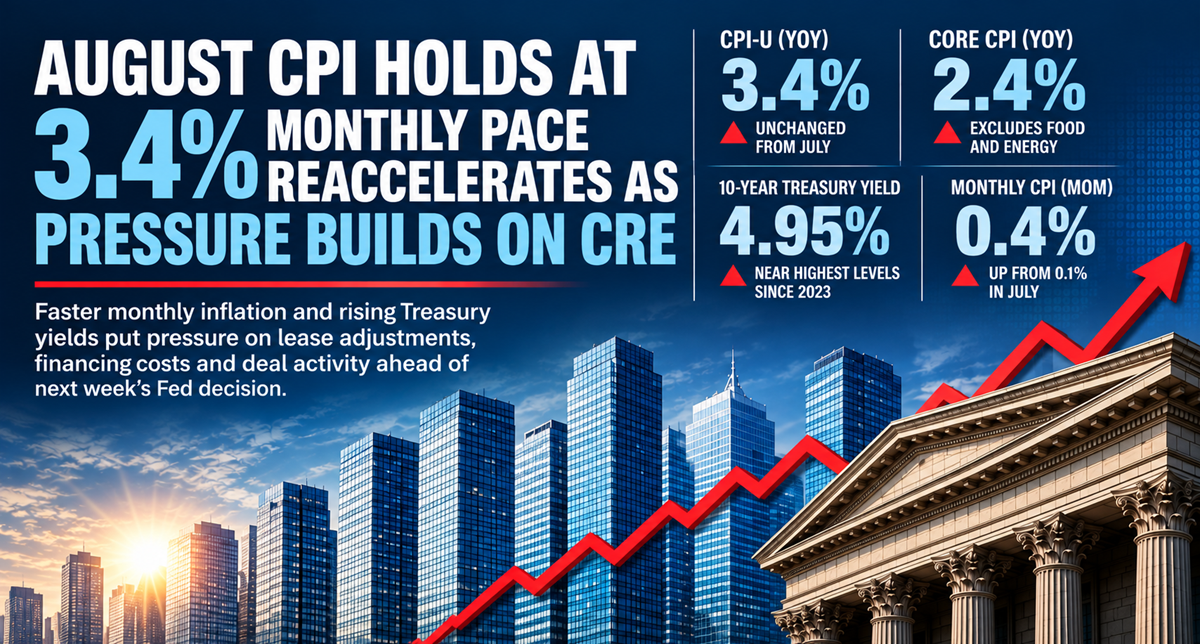
Faster monthly inflation and rising Treasury yields put pressure on lease adjustments, financing costs and deal activity ahead of next week’s Fed decision.
Monthly CPI jumped to 0.4%, and Treasury yields rose to their highest level since 2023 ahead of next week’s Fed decision.
Higher monthly inflation and rising Treasury yields are putting pressure on commercial real estate through both lease economics and the cost of capital, with a Fed rate decision looming next week.
The latest Consumer Price Index report shows inflation remained elevated in August, with the CPI-U increasing 3.4% year over year, unchanged from July. The monthly trend tells a sharper story: CPI-U rose 0.4% from July to August, up from just 0.1% the month before, signaling a notable reacceleration. Core CPI, which excludes food and energy, increased 0.3% for the month and 2.4% year over year.
Energy was a major contributor to the headline increase, with gasoline prices and broader energy costs climbing sharply amid ongoing geopolitical tensions. That matters beyond the gas pump. Higher fuel costs also increase the cost of doing business for commercial real estate professionals and clients, particularly when touring multiple properties across a market. For brokers, buyers, tenants and other decision-makers, higher gas prices add to the cost of property tours, site visits and regional travel.
The report lands just days before the Federal Reserve’s next policy meeting, with markets responding by pushing up the odds of a rate hike. For commercial real estate, that combination of faster monthly inflation and a more hawkish rate outlook is where the story gets interesting.
Leases: CPI rent escalation ties periodic rent increases to changes in the Consumer Price Index, helping keep rents aligned with inflation over the term of a lease. The CPI-U is the most commonly referenced index in commercial leases with CPI-based adjustments. With CPI-U up 3.4% over the past year, this is a reminder for agents, tenants and landlords to review lease provisions and understand how the latest CPI reading may affect upcoming rent adjustments. The specific lease language, measurement period, caps and floors determine the actual adjustment.
Borrowing costs: Treasury yields are also an important factor in CRE financing, and they’ve been moving higher. The 10-year Treasury yield climbed to approximately 4.95% this week, near its highest levels since 2023, as markets priced in a greater likelihood of a Fed rate hike next week. Higher Treasury yields can translate into higher borrowing costs for many fixed-rate commercial real estate loans and put upward pressure on the returns investors require.
What this means for CRE: Persistent inflation and elevated borrowing costs can widen the gap between what buyers are willing to pay and what sellers expect. Higher lease revenue from CPI-linked increases can help property owners offset rising operating costs, but higher financing costs can pressure valuations and transaction activity. If the Fed raises rates next week, that gap could widen further before it narrows.
For brokers, the takeaway is straightforward: watch three things, and keep an eye on the Fed. CPI can influence property income through lease adjustments, Treasury yields influence the cost of capital and the return investors require, and higher fuel costs increase the expense of touring properties and conducting site visits. With the Fed decision just days away, changes in inflation, Treasury yields and rate expectations can quickly affect pricing, underwriting, transaction timing and how clients approach the market.