Rates Aren’t Falling. Here’s Why Smart Buyers Don’t Care.
Fed Holds Rates Steady, Again, but the Commercial Real Estate Playbook Has Changed
Higher-for-longer rates are no longer the story. Adapting to them is.
Despite elevated borrowing costs, opportunity persists for well-positioned buyers.
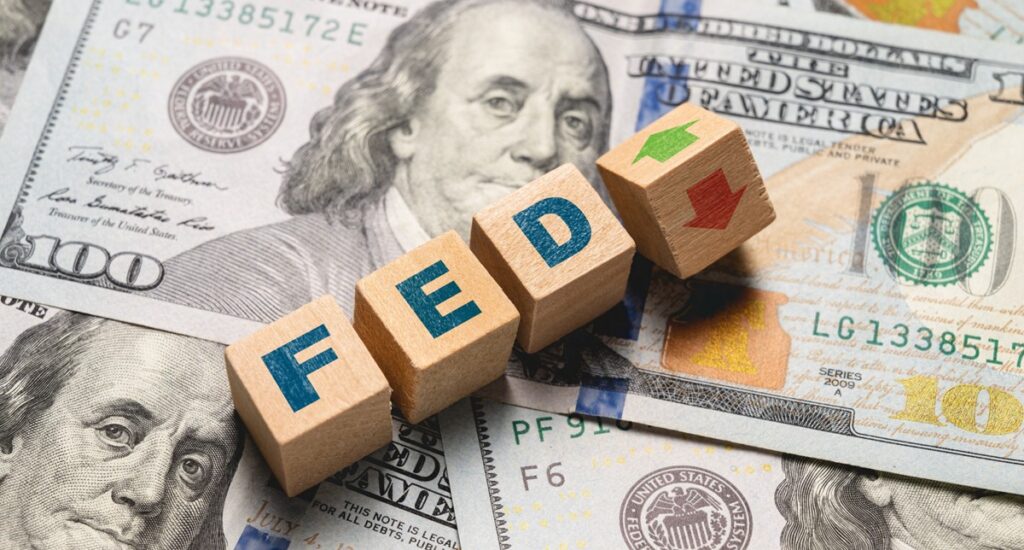
The Federal Reserve concluded its July meeting by keeping the benchmark federal funds rate unchanged at 3.50% to 3.75%, but this time the decision came with a notable wrinkle: three regional bank presidents dissented, pushing instead for a rate increase. It was the first time since 2016 that three Fed officials broke from the majority in the same direction on a policy vote, signaling that internal pressure to tighten monetary policy is growing within the Federal Open Market Committee itself.
Under Chair Kevin Warsh’s leadership, the Fed has kept its message consistent: restoring price stability remains the top priority. The July policy statement mirrored June’s almost word for word, holding rates steady for a second consecutive meeting even as inflation has remained persistently above the Fed’s long-term 2% objective.
But the unanimity of earlier meetings has faded. Cleveland’s Beth Hammack, Minneapolis’s Neel Kashkari, and Dallas’s Lorie Logan all voted for a quarter-point rate hike, arguing that a resilient economy, supported by continued investment in AI infrastructure and data centers, no longer requires an accommodative policy stance. Renewed conflict between the United States and Iran, which pushed energy prices higher again in late July, further strengthened the case for tighter monetary policy.
Reports following the meeting also pointed to growing differences of opinion over the appropriate path for monetary policy, adding another layer of uncertainty to the Fed’s outlook. Whether those differences remain internal or become more public, markets are increasingly focused on whether inflation or economic growth will ultimately drive the Committee’s next move.
What This Means for Commercial Real Estate
For commercial real estate, the implications remain much as they were in June, only more entrenched.
-
- Near-term financing relief appears unlikely, and a rate increase later this year can no longer be ruled out.
-
- Buyers and sellers should underwrite for a higher-for-longer environment rather than anticipate imminent rate cuts.
-
- Cap rate compression driven by falling interest rates remains unlikely in the near term.
-
- Long-term borrowing costs continue to rise independently of the Fed’s benchmark rate. The 10-year Treasury yield reached its highest level in nearly a year in late July, as investors priced in the possibility that inflation could prove more persistent than expected.
-
- Pricing discipline and operational performance continue to separate transactions that close from those that stall.
Transaction activity has not disappeared. It has simply become more selective.
Private owner-users remain among the most active buyer groups in today’s market, particularly within the 5,000 to 15,000 square foot range. These properties remain financeable, broadly marketable, and accessible to private businesses seeking to convert occupancy costs into equity while securing greater long-term control over their operating costs.
As institutional capital remains cautious, owner-users continue to represent a meaningful and growing share of transaction activity across Southern California.
Looking Ahead
The Fed’s next meeting is scheduled for September 15 to 16, 2026, with two inflation reports due beforehand. Some economists expect those reports to show enough improvement to keep the Fed on hold through year-end. Others argue that inflationary pressures stemming from tariffs, energy, and AI-driven demand are proving more persistent than temporary, increasing the risk that waiting too long could require more aggressive action later.
The market has moved beyond asking when rates will come down and toward figuring out how to create value in today’s capital markets environment. Execution matters more than prediction. Realistic underwriting and proactive client communication now count for more than waiting on rate relief. The buyers and sellers that succeed won’t be those banking on lower rates, but those who know how to structure, underwrite, and close in this environment.