Supply Pullback Stabilizes Orange County Multifamily Market
Fundamentals Hold Steady as Growth Moderates in OC’s Multifamily Market
Orange County’s multifamily fundamentals remain anchored by a persistent housing shortage and the widening gap between renting and homeownership costs.
A moderate market could set the stage for supply-constrained, long-term yield opportunities.
Managing Director of Research and Public Relations at NAI Capital Commercial
Orange County’s multifamily sector entered 2026 in a period of moderation. Following a recent peak in deliveries, fourth-quarter 2025 saw developers pull back sharply, allowing vacancy to stabilize at a tight 3.8 percent even as rent growth plateaued. The shift reflects strategic caution as elevated interest rates and pricing expectations continue to shape underwriting.
Demand and Supply Navigating the “Supply Cliff”
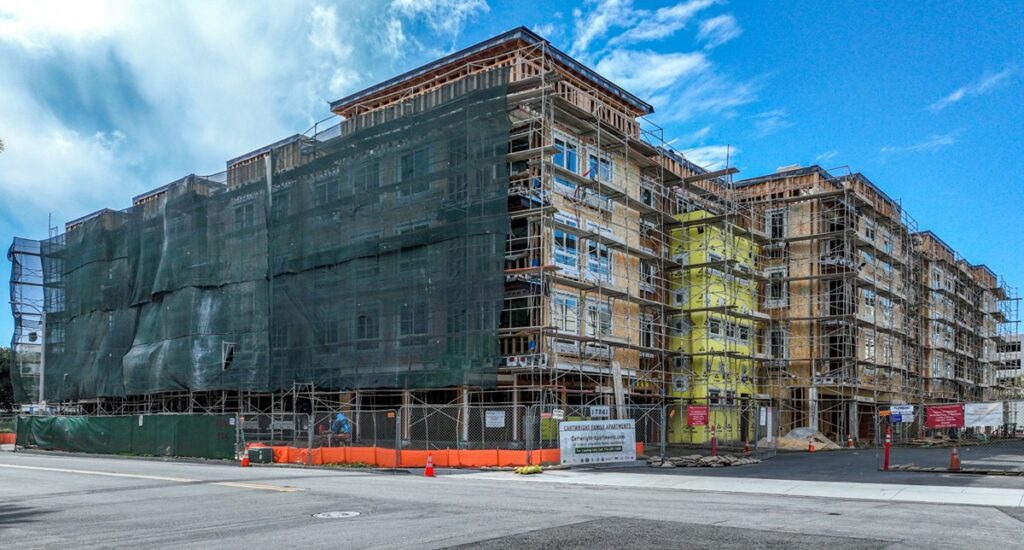
Vacant units inched up 0.1 percent quarter over quarter to 11,926 but remained down 1.6 percent year over year, signaling gradual relief from earlier supply pressure. Developers delivered just 430 new units in the fourth quarter, a 26 percent drop from the third quarter, bringing year-to-date deliveries to 1,979 units, down 43 percent from 2024. With only 4,775 units still under construction – a 14 percent annual decline – the market is approaching a potential supply cliff that could tighten inventory by 2027.
Vacancy held at 3.8 percent, suggesting steady renter demand. Average asking rents slipped $9 from the third quarter to $2,702 per unit but still posted a 1.7 percent year-over-year gain. Since the 2024 development peak, higher borrowing costs and construction expenses have tempered the rapid growth seen earlier in the cycle.
A Bifurcated Investment Landscape
Sales activity reflected a split market. Fourth-quarter transaction volume rose 18 percent quarter over quarter, though year-to-date sales fell 15 percent to nearly $1.9 billion. Investors acquired 5,231 units in 2025, down 10 percent from 2024, with the average price per unit reaching $386,605, up 1.7 percent year over year.
Institutional buyers drove the late-year pickup, targeting well-located, stabilized assets.
A total of 11 transactions of 100 units or more closed in 2025, compared with 10 in 2024. Meanwhile, the middle market remained constrained, with the average deal size falling to $5.4 million, well below the 2022 peak of $13.5 million.
Notable Transactions
Affordability and Senior Housing: A 333-unit senior housing community traded for $160 million, or $480,480 per unit, with affordability restrictions in place through 2032.
Institutional Portfolios: The 332-unit REVO Apartments in Anaheim sold for $152.19 million, or $460,693 per unit, as part of a multi-state portfolio acquisition by Griffis Residential, underscoring continued demand for stabilized Orange County assets.
Long-term Yield Remains the Target
The macro picture shows moderation, but the underlying story remains bifurcated. Small- and mid-cap investors are still constrained by financing costs, while institutions continue to pursue core and affordable assets.
Orange County’s multifamily fundamentals remain anchored by a persistent housing shortage and the widening gap between renting and homeownership costs. Slower rent growth may temper near-term valuations, but the decline in new starts points to tightening conditions ahead. For selective investors, this stretch of moderation may set the stage for a more supply-constrained market where long-term yield remains the target.