The Cargo Cooldown Hits Southern California’s Warehouse Market
Ports Start 2026 With Slower Cargo as Warehouse Demand Shifts Gear
Southern California’s warehouse supply continues to recalibrate as port volumes dip year over year.
Industrial vacancy rises across Southern California as cargo volumes normalize following last year’s tariff-driven surge.
Managing Director of Research and Public Relations at NAI Capital Commercial
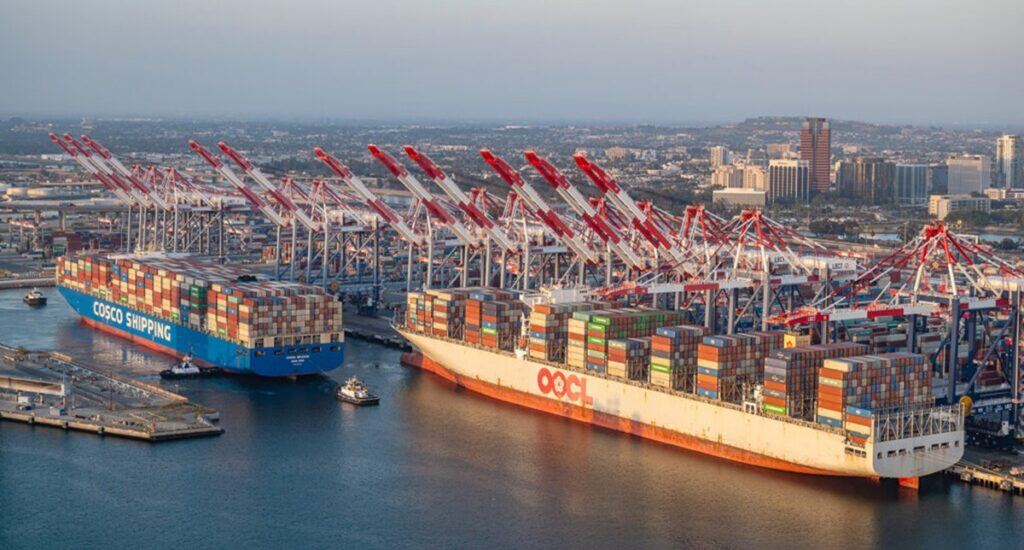
The latest figures show the Port of Los Angeles and Port of Long Beach received a combined 831,412 loaded import TEUs in January, a 13.0% year-over-year decline, underscoring the continued softening of the nation’s primary port complex, which processes roughly one-third of all U.S. imports. Port leaders attributed the softer comparison largely to last year’s surge in imports, when companies accelerated shipments ahead of expected tariffs. That earlier inventory build, combined with ongoing trade policy uncertainty, has slowed the pace of restocking to start 2026.
The shift is showing up in broadly rising vacancy across Southern California’s logistics corridors. Los Angeles County currently registers 6.6% vacancy, up 40 basis points from Q4 2025 and 70 basis points from 5.9% a year ago. Orange County sits at 5.9%, a slight improvement from 6.0% in Q4 2025 but still above the 5.4% recorded in Q1 2025. The Inland Empire has climbed to 9.1%, up 10 basis points from the prior quarter and 130 basis points from this time last year. Ventura County, at 3.3%, is up 30 basis points from Q4 2025 and 90 basis points from the start of 2025.
Taken together, the vacancy data suggests demand is normalizing after several years of record-breaking logistics expansion. Inventory levels remain elevated, and many occupiers are approaching new leasing decisions more cautiously while monitoring trade policy and consumer spending trends.
Operationally, the ports remain fluid. According to port data, truck cargo dwell times averaged 2.75 days, while rail-bound containers moved in approximately 6.14 days, reflecting stable coordination across terminals, drayage providers, and rail partners.
For industrial landlords and investors, the takeaway is clear: the ports continue to drive demand across Southern California’s warehouse market, but the market has shifted from the breakneck absorption of the pandemic era to a steadier, more selective pace.