Why LA Office Tenants Who Wait Are Paying for It
The Flight to Quality and the Cost of Hesitation
Executive Vice President Tina LaMonica, SIOR reveals what Q1 2026 is telling us about tenant strategy in the Los Angeles office market.
From consulate expansions to medical conversions, a firsthand view of where the market actually stands.
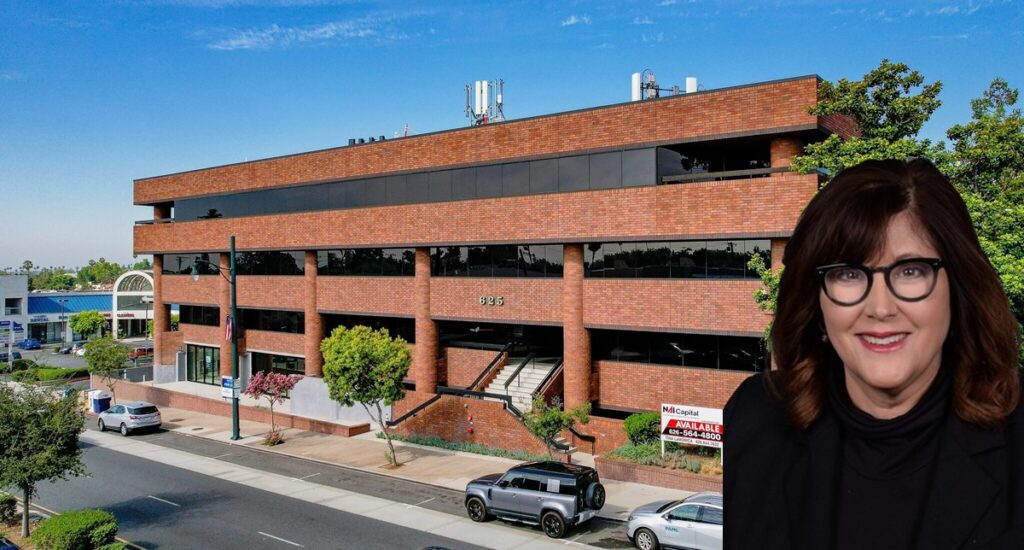
The Los Angeles office market is in recovery, and few professionals have a more nuanced view of it than Tina LaMonica, SIOR. With active assignments representing both tenants and landlords, Tina brings that dual perspective to the table. On the tenant side, her recent work includes representing the Consulate General of India in securing a full-floor lease at the iconic Aon Center in Downtown Los Angeles, a historic milestone for the Indian-American community and a meaningful expansion of consular services in Southern California, where Greater Los Angeles is home to the second-largest Indian-American population in the state. The new consulate marks only the second in California.
On the landlord side, Tina has served as exclusive leasing agent for 625 Fair Oaks, a 92,000-square-foot Class A office building in South Pasadena’s Tri-Cities submarket since 2018. She took the building from largely vacant to 100% occupancy, only to navigate the challenges many landlords now face: retaining occupiers, attracting new ones, and competing for a smaller pool of active tenants.
I recently spoke with Tina to get her read on where the office market stands as the first quarter of 2026 closes out. Below is our conversation.
Q: As Q1 2026 closes out, how tight are options getting for tenants targeting high-quality buildings in the best Los Angeles submarkets and where is the squeeze most acute right now?
A: Greater Los Angeles Class A office vacancy reached 22.7%, a marginal decrease from year-end 2025. This performance is anchored by a persistent flight-to-quality, most evident in Century City, where Class A vacancy has tightened to 13.6% and continues to trend toward single digits.
Q: Are tenants in active deals today prioritizing longer-term certainty or leaning toward shorter commitments to stay flexible and what’s driving that preference in the current environment?
A: Tenants know that they can get more concessions with a longer lease but with the continued uncertainty in the economy many tenants still want 3-year leases.
Q: How would you characterize tenant urgency right now. Are most occupiers still in a wait-and-see posture, or has something shifted that’s pushing more of them to act?
A: Every tenant that has an expiring lease can’t really wait and see what happens otherwise they get charged a holdover penalty. A holdover penalty is a fee charged to tenants who remain in a space after their lease has expired, often calculated as a percentage increase over the original rent or a fixed daily amount. Many landlords charge a percentage increase over the standard rent, often ranging from 125% to 200% of the original rent.
Q: For tenants who are finally engaging after a long stretch on the sidelines, what’s the trigger, is it lease expirations forcing the issue, internal business pressure, or a change in how they’re reading the market?
A: Expiring leases are prompting tenants to act, yet a notable trend has emerged: most are foregoing early negotiations in anticipation of further rent adjustments. This strategy is fueling a flight-to-value, as Class B and C tenants migrate into Class A buildings to capitalize on motivated landlord concessions. Conversely, tenants in trophy Class A assets often face elevated renewal rates that exceed their current occupancy budgets. In these instances, rather than discounting rents, landlords are offering specific concessions or beneficial occupancy terms. Consequently, many tenants are ‘voting with their feet,’ upgrading their office space by leveraging the significant availability currently on the market.
Q: What’s the biggest mistake you’re seeing tenants make right now in how they’re approaching the market?
A: While many tenants are confident in their five-year business outlook, opting for short-term leases often creates a strategic disadvantage. These tenants typically forfeit valuable concessions and remain exposed to higher rent escalations than they would under a standard five-year term with fixed 3% annual increases. I have seen this pattern repeatedly, it is a common occurrence during market downturns as tenants prioritize perceived flexibility over long-term cost certainty.
Q: Where are you seeing the strongest absorption activity across your listings and which are generating the most competitive interest from tenants right now?
A: I am currently transitioning a large office listing to medical use to capitalize on sustained demand. Medical office occupiers are competing for a limited supply of quality space, and vacancy rates in this sector remain notably lower than the broader office market. It remains one of the most in-demand product types currently available.
Q: When tenants are coming to the table, are they pushing for longer-term deals that lock in today’s economics, or are they asking for flexibility, and how are you structuring deals to meet that demand while protecting your landlord clients’ interests?
A: There is more demand for flexibility, but landlords will generally not do less than 3-year leases.
Q: How would you characterize the quality of tenant engagement you’re seeing right now, are more occupiers arriving with real conviction and decision-making authority, or are you still fielding a lot of exploratory conversations that stall out?
A: I mostly work with existing or referral tenants and they are ready to act. On occasion, I will tell clients I don’t think they should do something at this time. We are advisors so tenant engagement doesn’t always result in a deal.
Q: For the tenants who are finally moving off the sidelines and into serious discussions, what’s bringing them in, and are those motivations translating into stronger deal terms for your landlord clients?
A: Most of the tenants coming to my office listing are moving due to something at their current building that is forcing them to move. What is an interesting trend is that rents are continuing to increase but vacancy is also increasing. Landlords are giving concessions like free rent but not moving much on the rate. Also, capital is tight, so I’m focused on finding tenants who need little in tenant improvements.
Q: What’s the biggest leverage point landlords have right now that tenants are underestimating or failing to account for in how they’re approaching negotiations?
A: Regardless of vacancy, landlords can hold out for the right deal. I hear this from tenants all the time: the building has so many vacancies, so we should get a better deal. What tenants don’t understand is that lenders are involved and making below-market deals hurts the value of the property.
Q: With so much vacant space across the market, is adaptive reuse to residential a real solution or is it cost-prohibitive?
A: We have seen very few adaptive reuse projects completed in Los Angeles. Jamison Properties has been one of the most active players, converting office buildings in Koreatown to residential, work that predates the pandemic. They are currently converting 1055 West 7th in Downtown LA, formerly Arco Tower and home to LA Care, to residential use. From what I understand, the economics generally require smaller floor plates and for most buildings the costs are prohibitive. It is not a scalable solution for the broader market.
Q: If conversion isn’t viable and Class B space sits empty, what is the plan for these assets?
A: Interestingly, the buildings I’ve seen returned to lenders have been Class A, not Class B. My sense is that many B and C building owners have held these assets for years, carry little or no debt, and can absorb vacancy in a way a heavily leveraged owner cannot. For them, it may simply be a waiting game.
Q: Could a Live-Work master lease, where a company takes both the office and residential units in a converted building for their employees, ever be a viable concept?
A: It is a compelling concept, but the practical challenges are steep. Dividing floor plates, adding plumbing, and removing drop ceilings represent a significant capital investment typically borne by the tenant rather than the owner. Live-work units usually feature a two-level configuration with office space on one floor and living quarters on the other. That specific layout does not translate easily to a conventional multi-story office building. While it is worth exploring conceptually, the financial feasibility remains the primary hurdle. This model is most effective in two-level designs, similar to the 901-931 E Walnut St project in Pasadena. That mixed-use development features ground-floor retail, office condos, and 111 residential units. I know this project well. I nearly had a listing there.